
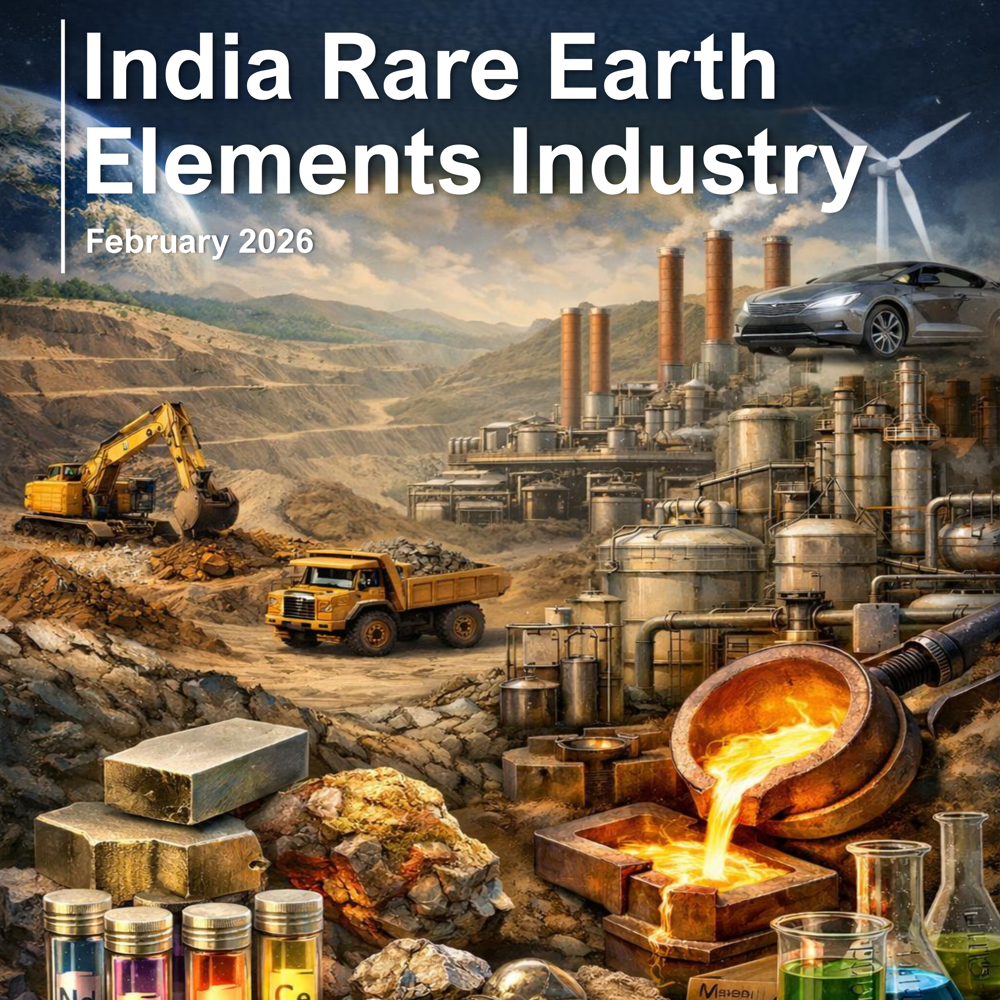

India Rare Earth Elements Industry Report – February 2026

$495.00

Category:

The India Rare Earth Elements (REEs) Industry Report – February 2026 provides a comprehensive, data-driven assessment of India’s position in the global rare earth supply chain at a time of rising geopolitical risk, clean-energy acceleration, and technology-driven demand growth.

The report examines India’s rare earth resource base, production landscape, import dependencies, and downstream vulnerabilities—particularly in permanent magnets, electric vehicles, renewable energy, defence, and advanced electronics. It evaluates the structural challenges constraining domestic value addition, including technological barriers in separation and refining, capital intensity, regulatory constraints, and limited private sector participation.

GSBR also analyses recent and proposed government initiatives such as Rare Earth Corridors, domestic magnet manufacturing incentives, the National Critical Mineral Mission, and MMDR Act reforms to assess their effectiveness in strengthening India’s supply-chain resilience and reducing reliance on imports, especially from China.

This report is designed for institutional investors, policymakers, corporates, hedge funds, strategy teams, and students seeking a clear understanding of India’s rare earth ecosystem, strategic risks, and medium-to-long-term opportunity set.
Report Summary

India holds one of the world’s largest rare earth resource bases, yet remains highly import-dependent, particularly for downstream products such as high-performance permanent magnets used in EVs, wind turbines, defence systems, and electronics. While India accounts for less than 1% of global REE production, domestic demand continues to rise steadily, driven by rapid growth in electric mobility, renewable energy capacity, defence spending, and electronics manufacturing.

The report highlights that control over downstream processing, separation, refining, and magnet manufacturing, represents the primary bottleneck in India’s rare earth ambitions, rather than geological scarcity. China’s dominance across these stages continues to pose a structural supply-chain risk for India’s manufacturing ecosystem.

The recent policy interventions mark a meaningful shift toward addressing these gaps, but execution risks remain high due to capital requirements, technology constraints, environmental regulations, and workforce limitations. The outlook suggests selective progress rather than broad-based self-sufficiency, with the most significant opportunities emerging in permanent magnets, critical minerals processing, and value-added downstream applications.

Table of Contents

  1. Introduction to Rare Earth Elements

    • What Are Rare Earth Elements?

  2. Rare Earth Elements and Their Applications

  3. India & Global Reserves and Production

  4. Rare Earth Elements Imports by India

  5. Strategic Importance of Rare Earth Elements for India

  6. China’s Rare Earth Dominance

  7. Rare Earth Value Chain

    • Exploration and Extraction

    • Beneficiation

    • Separation of Rare Earth Elements

    • Refining

  8. Policy and Regulatory Framework

    • Government Subsidies to Boost Domestic Rare Earth Magnet Production

    • Rare Earth Corridors to Boost Permanent Magnets Production

    • National Critical Mineral Mission

    • Amendments under the MMDR Act

  9. Challenges Facing India’s Rare Earth Industry

    • Technological Constraints

    • Capital Intensity and Scale Limitations

    • Environmental and Regulatory Challenges

    • Skilled Workforce Constraints

Shopping Cart
India Rare Earth Elements Industry Report - February 2026India Rare Earth Elements Industry Report – February 2026
$495.00
Scroll to Top